
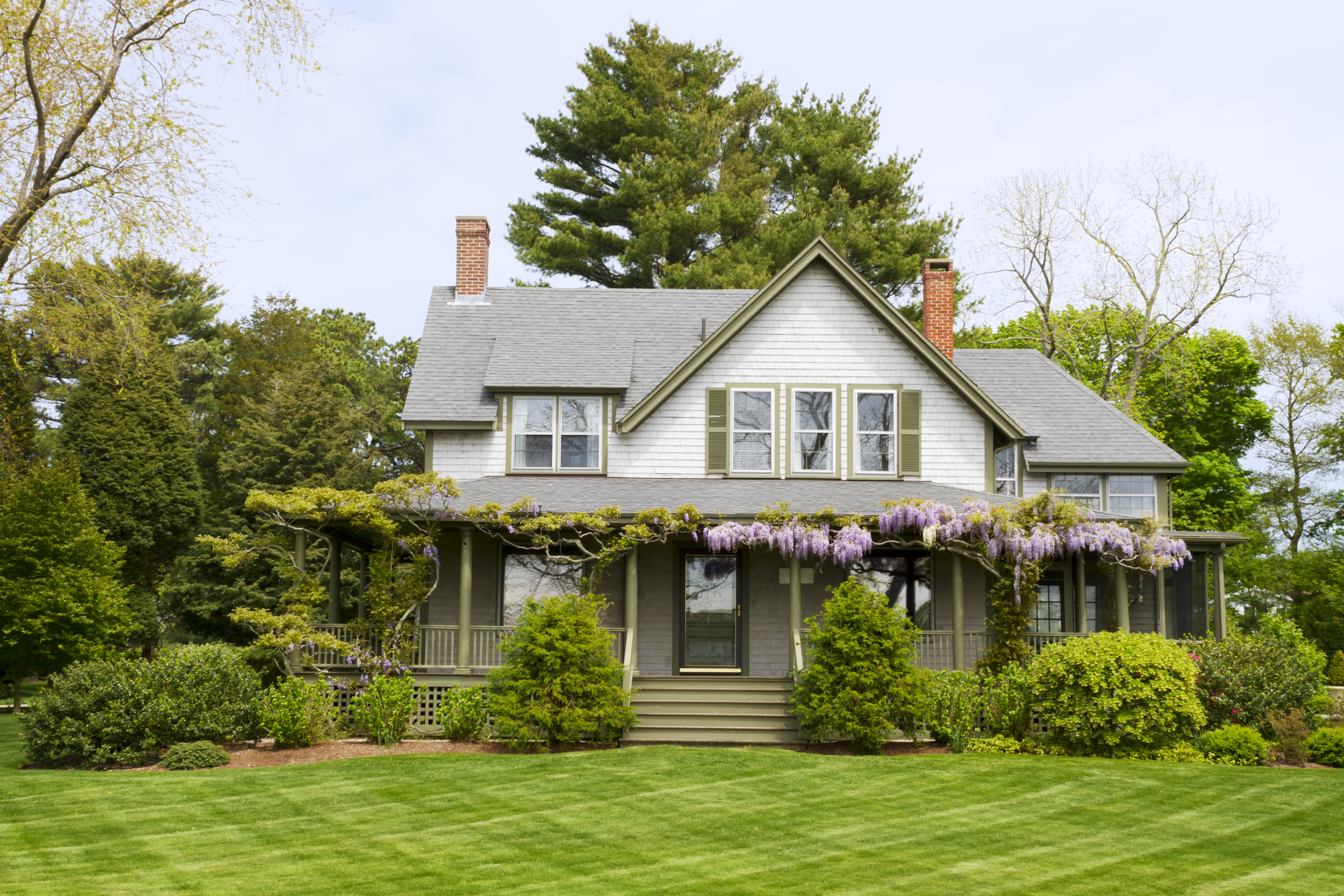
When planning landscaping, most homeowners focus on plants, patios, and walkways—but overlook one of the most visible elements of the home:
👉 The Roof
In Rhode Island, where homes are often exposed to coastal conditions, varied architecture, and seasonal changes, coordinating your roof with your landscaping can significantly improve curb appeal and long-term durability.
Here are the three key elements to consider: color, shape, and texture.
Match Landscaping to Roof Color
Your roof is one of the largest visual surfaces on your home. Its color should guide your landscaping choices.
Consider:
- Roof color
- Siding, brick, or stone tones
- Trim and accent colors
Design approach:
- Complementary colors → create a cohesive, balanced look
- Contrasting colors → create visual interest and definition
💡 Planning ahead:
If you’re considering a new roof, choose a color and material that works with both your home and future landscaping.
Work with the Shape of the Roof
Rooflines influence how your home feels visually—and landscaping can reinforce that.
Examples:
- Steep or vertical rooflines
→ Pair with tall, narrow trees to emphasize height - Gables or curved rooflines
→ Use rounded shrubs or layered plantings to mirror the shape - Low-pitch roofs
→ Wider, horizontal landscaping can create balance
Even outdoor elements like patios and furniture can be selected to complement the architectural lines of the roof.
Use Texture to Tie Everything Together
Roofing materials have distinct textures—and your landscaping can echo them.
Roofing textures:
- Asphalt shingles
- Wood shakes
- Slate
- Tile
Complementary landscape features:
- Stone walkways
- Retaining walls
- Gravel or cobblestone paths
Carrying similar textures from the roof down to the ground creates a more unified and intentional design.
Smart Plant Placement Around the Home
Landscaping isn’t just about appearance—it also affects how your home performs.
Best practices:
- Keep plants and shrubs a short distance away from the house
- Allow airflow to help siding and trim dry after rain
- Reduce moisture buildup near the foundation
This is especially important in Rhode Island’s humid and coastal environment, where moisture can lead to:
- Rot
- Mold
- Pest activity
Why This Matters in Rhode Island Homes
Local conditions play a major role:
- Coastal exposure affects materials and colors
- Older homes benefit from thoughtful visual updates
- Seasonal changes highlight both landscaping and roofing
Coordinating these elements improves:
- Curb appeal
- Property value
- Long-term durability
Final Thought
Your roof and landscaping shouldn’t be designed separately—they should work together.
By aligning color, shape, and texture, you can create a home that looks more intentional, performs better, and stands out for the right reasons.