
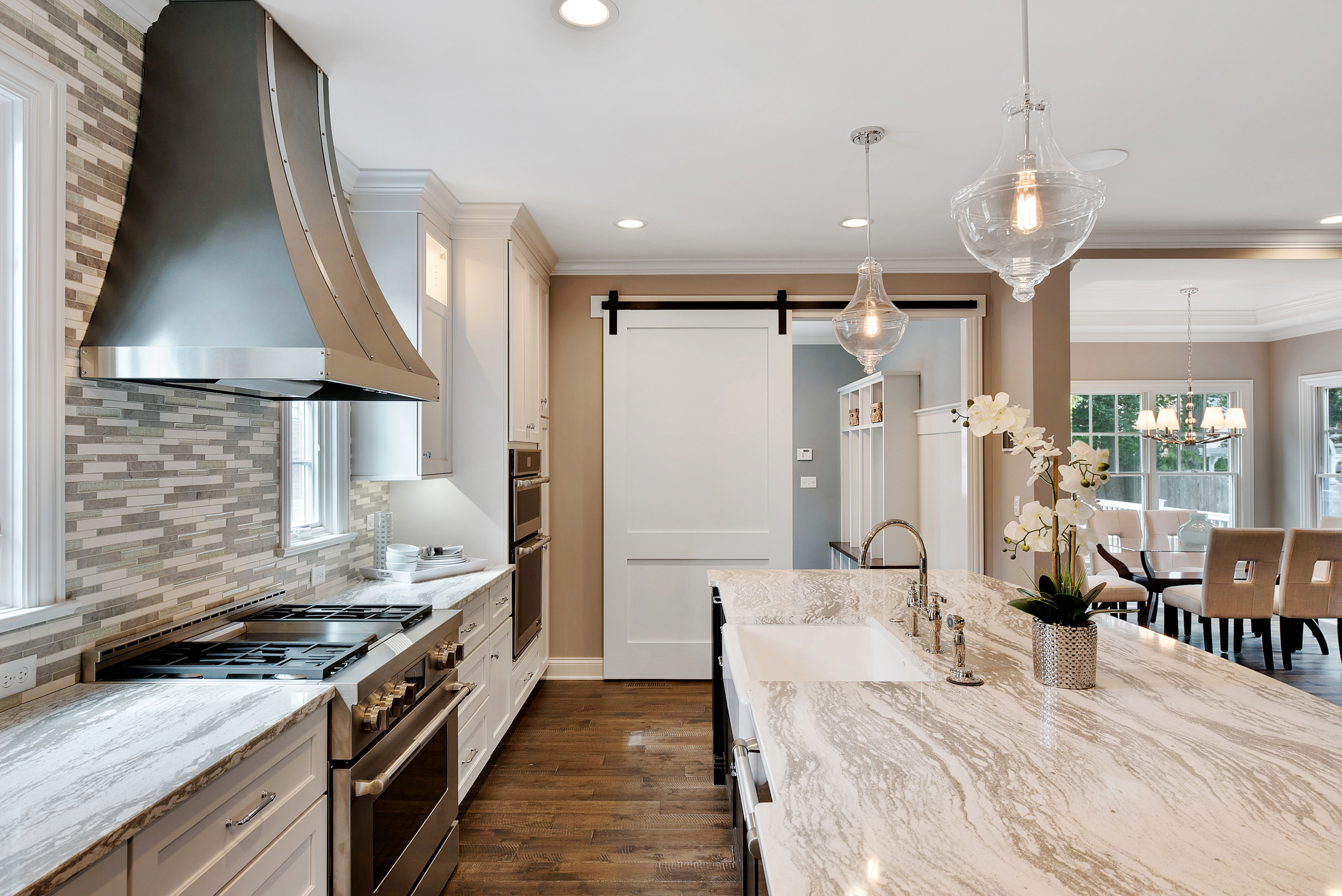
When homeowners think about updating a space, they often focus on finishes, furniture, and layout—while lighting becomes an afterthought.
But in reality, lighting is one of the most important elements in any room. The right lighting can completely change how a space looks, feels, and functions.
In many Rhode Island homes—especially older ones—poor lighting design leads to shadows, uneven brightness, and underutilized spaces.
Here’s how to choose lighting that works both functionally and visually.
The Three Types of Lighting Every Room Needs
A well-designed space uses a combination of lighting types—not just one fixture.
Ambient Lighting (General Lighting)
Ambient lighting provides overall illumination for a room.
Common options:
- Ceiling fixtures
- Chandeliers
- Recessed lighting
Recessed lighting is often preferred in renovations because it delivers even light without taking up visual space.
Task Lighting (Focused Lighting)
Task lighting is used where specific activities take place.
Examples:
- Under-cabinet lighting in kitchens
- Desk or reading lamps
- Vanity lighting in bathrooms
The key is to match the light to the activity—this reduces eye strain and improves usability.
Accent Lighting (Highlighting Features)
Accent lighting is used to draw attention to specific features.
Common uses:
- Artwork
- Architectural details
- Fireplaces or built-ins
A general rule:
👉 Accent lighting should be noticeably brighter than surrounding light to create contrast.
Options include:
- Track lighting
- Recessed directional lights
- Pendant fixtures
Choosing the Right Bulbs (What Actually Matters)
Modern lighting has moved well beyond basic wattage.
Focus on these factors:
Lumens (brightness):
- Determines how much light a bulb produces
Color temperature:
- Warm light (2700K–3000K) → Living spaces, bedrooms
- Neutral (3000K–4000K) → Kitchens, bathrooms
- Cooler light → Workspaces
LED vs traditional bulbs:
- LED = energy efficient, long-lasting, better control
- Most modern fixtures are designed for LED use
⚠️ Always check fixture ratings to ensure compatibility.
Common Lighting Mistakes in Rhode Island Homes
From experience, these come up often:
- Relying on a single overhead fixture
- Poor placement of recessed lighting
- Not enough light in work areas
- Mismatched color temperatures
- Ignoring natural light patterns
These issues are especially common in:
- Older homes with limited wiring
- Renovations where lighting wasn’t part of the initial plan
Why Lighting Should Be Planned Early
Lighting works best when it’s part of the overall design—not added at the end.
Proper planning allows for:
- Better fixture placement
- Cleaner wiring and installation
- Improved balance between natural and artificial light
This is particularly important during:
- Kitchen remodels
- Additions
- Basement finishing projects
Final Thought
The right lighting doesn’t just illuminate a space—it defines it.
A well-lit home feels:
- More comfortable
- More functional
- More visually appealing
And in many cases, lighting upgrades deliver one of the best returns for relatively low cost.