
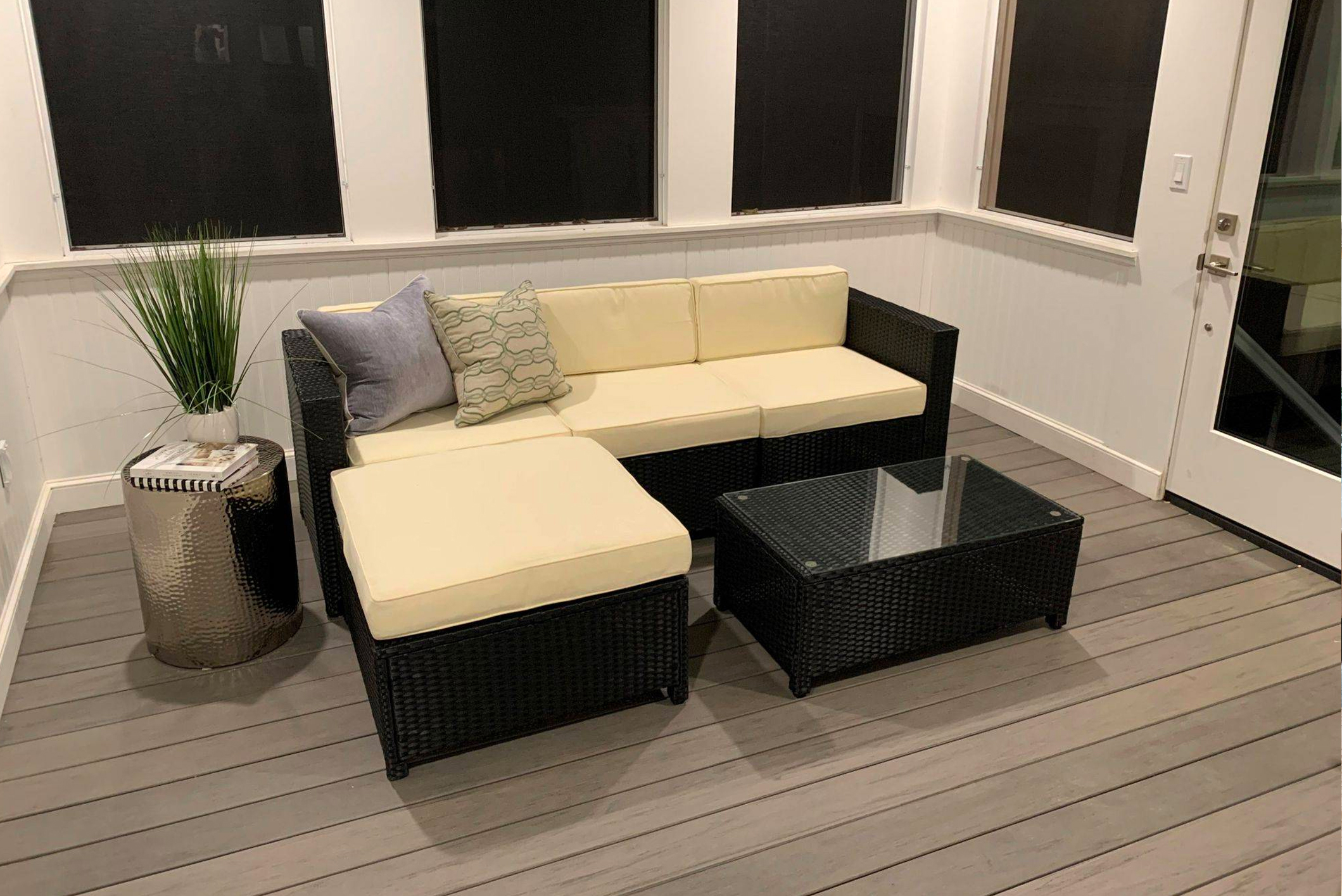
Thinking about adding a sunroom to your home?
Before you get to the furniture and layout, one of the most important decisions you’ll make is the flooring. In Rhode Island—especially in coastal areas—sunrooms are exposed to moisture, temperature swings, and heavy sunlight, which makes flooring selection critical.
After working on sunrooms throughout Newport County, I can tell you: the wrong flooring choice leads to fading, warping, and premature failure.
Here’s what to consider before you decide.
What Makes Sunroom Flooring Different?
A sunroom isn’t like the rest of your house.
It deals with:
- Direct sunlight (UV exposure)
- Temperature fluctuations (hot summers, cold winters)
- Moisture and humidity
- Foot traffic coming from outdoors
Good sunroom flooring must be:
- Moisture-resistant
- Fade-resistant
- Durable
- Comfortable underfoot in both hot and cold conditions
Carpet and Indoor/Outdoor Tiles
Modern indoor/outdoor carpeting has improved significantly and can work well in a sunroom.
Pros:
- Comfortable year-round
- Doesn’t overheat in direct sun
- Warmer underfoot in winter
Considerations:
- Must be rated for indoor/outdoor use
- Susceptible to mildew if moisture is not controlled
💡 Alternative:
Carpet tiles are a practical option—they can be replaced individually if damaged.
Hardwood Flooring
Hardwood offers a clean, high-end look, especially in lighter tones.
Pros:
- Attractive and timeless
- Cooler underfoot in summer
Considerations:
- Can fade over time from sun exposure
- Not ideal in high-moisture environments
- Doesn’t retain heat well in winter
💡 Tip:
Lighter woods perform better in sunrooms. Dark stains tend to show fading more quickly.
Laminate Flooring
Laminate can replicate wood or stone at a lower cost.
Pros:
- Affordable
- Easier to install
- Wide variety of styles
Considerations:
- Can fade if not UV-rated
- Less tolerant of moisture than other options
⚠️ Choose a product specifically designed with UV protection and moisture resistance.
Tile Flooring
Tile is one of the most durable and practical options for sunrooms.
Pros:
- Handles moisture well
- Very durable
- Helps regulate temperature in warmer months
Options:
- Ceramic (traditional look)
- Porcelain (more durable)
- Slate or stone (modern or rustic look)
Considerations:
- Can feel cold in winter
- Dark tiles can get hot in direct sun
Concrete Flooring
Concrete has become a popular choice for modern sunrooms.
Pros:
- Extremely durable
- Moisture-resistant
- Can be stained, stamped, or polished
Considerations:
- Cold in winter
- Can become slippery when wet
- Requires proper finishing for residential use
Linoleum Flooring
Linoleum is making a comeback and performs well in high-traffic areas.
Pros:
- Durable and easy to clean
- Made from natural materials
- Comfortable underfoot
Considerations:
- Can fade with prolonged sun exposure
- Must choose sun-resistant products
What Works Best in Rhode Island?
Based on local conditions:
Most reliable options:
- Tile (especially porcelain)
- Properly finished concrete
- High-quality indoor/outdoor flooring
Use caution with:
- Hardwood (moisture + sun exposure)
- Standard laminate (without UV protection)
Final Thought
A sunroom is meant to be enjoyed year-round—but only if it’s built with the right materials.
Flooring is one of the most important decisions you’ll make. Choosing a product that can handle Rhode Island’s climate conditions will save you from costly repairs and replacements down the road.