
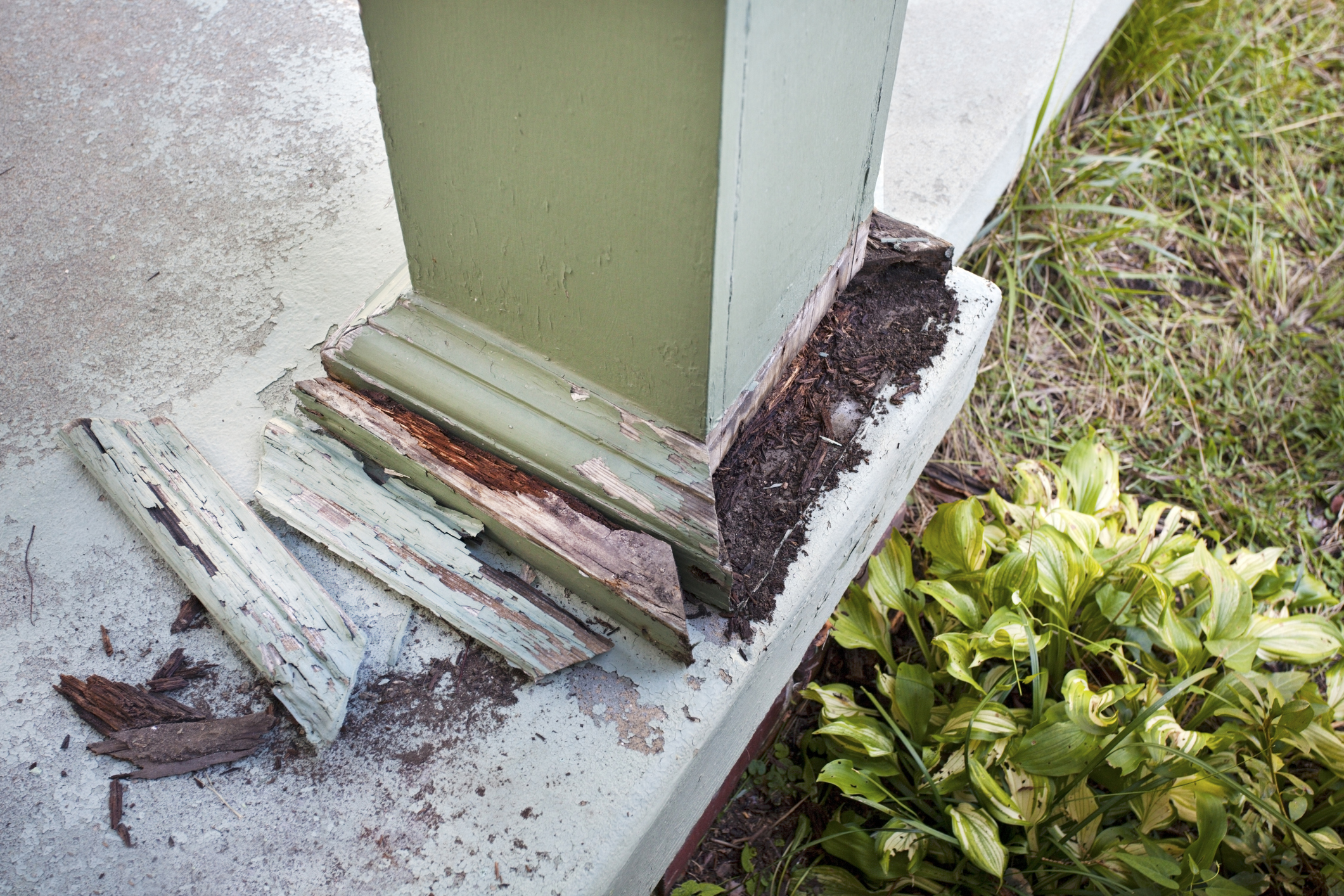
You’ve got termites” is something no homeowner wants to hear—but in Rhode Island, especially in older homes and areas with moisture, it’s more common than people think.
Termites cause billions of dollars in damage each year in the United States, and in many cases, the damage isn’t visible until it becomes serious.
After working on homes throughout Newport County, termite issues often show up as hidden structural damage—especially in sills, framing, and areas exposed to moisture.
Here’s what to look for—and what to do if you suspect a problem.
Look for Early Signs of Termites
Termites are drawn to moisture and wood, making foundations and lower structural areas especially vulnerable.
Common warning signs:
- Mud tubes (about the width of a pencil) along foundations or walls
- Soft or hollow-sounding wood
- Bubbling or damaged paint
- Discarded wings near windows or doors
- Areas of unexplained wood damage
These tubes allow termites to travel between their underground colony and your home.
Identify the Type and Extent of the Infestation
Not all termite problems require the same solution.
- Early-stage infestations may be controlled locally
- More advanced infestations often require full treatment
Correct identification is critical:
👉 The wrong approach can allow damage to continue unseen
Treatment Options (When It Gets Serious)
For significant infestations, professional treatment is required.
Options may include:
- Targeted treatments
- Bait systems
- Full structural fumigation (in severe cases)
If fumigation is necessary:
- You may need to leave the home for 24–72 hours
- Pets and plants must be removed or protected
- Food items must be sealed or removed
Prepare Your Home for Treatment
If professional treatment is required, preparation is important.
Typical steps:
- Trim vegetation away from the foundation
- Ensure access around the structure
- Secure or remove food and household items as instructed
Proper preparation helps ensure treatment is effective.
Inspect Your Home Annually
Termites are often active without being visible.
Annual inspection should include:
- Checking exposed wood and framing
- Looking for mud tubes or moisture damage
- Inspecting crawl spaces, basements, and sill areas
💡 Spring is peak activity season—but damage can occur year-round.
Prevention Is the Most Important Step
Termites thrive where wood and moisture meet.
Reduce risk by:
- Fixing leaks (plumbing, HVAC, gutters)
- Keeping gutters clean and directing water away from the house
- Storing firewood away from the foundation
- Keeping vegetation trimmed back
- Maintaining proper ventilation in crawl spaces and basements
In Rhode Island’s climate, moisture control is the key to prevention.
Why Termite Damage Is a Bigger Issue Than It Appears
In many homes, termite problems are not just pest issues—they are structural issues.
Common areas affected:
- Sill plates
- Floor framing
- Rim joists
- Structural supports
By the time termites are visible, repairs are often required.
Final Thought
Termites don’t go away on their own—and the longer they go unnoticed, the more damage they cause.
Early detection and proper treatment are critical, but long-term prevention is what protects your home.